

The program
The 12 Week Behavior Reset
Twelve weeks of measured work on the nervous system underneath your child's behavior. Three short visits a week, with simple work at home.
480+ five-star Google reviews · 3,000+ patients served
What is going on underneath
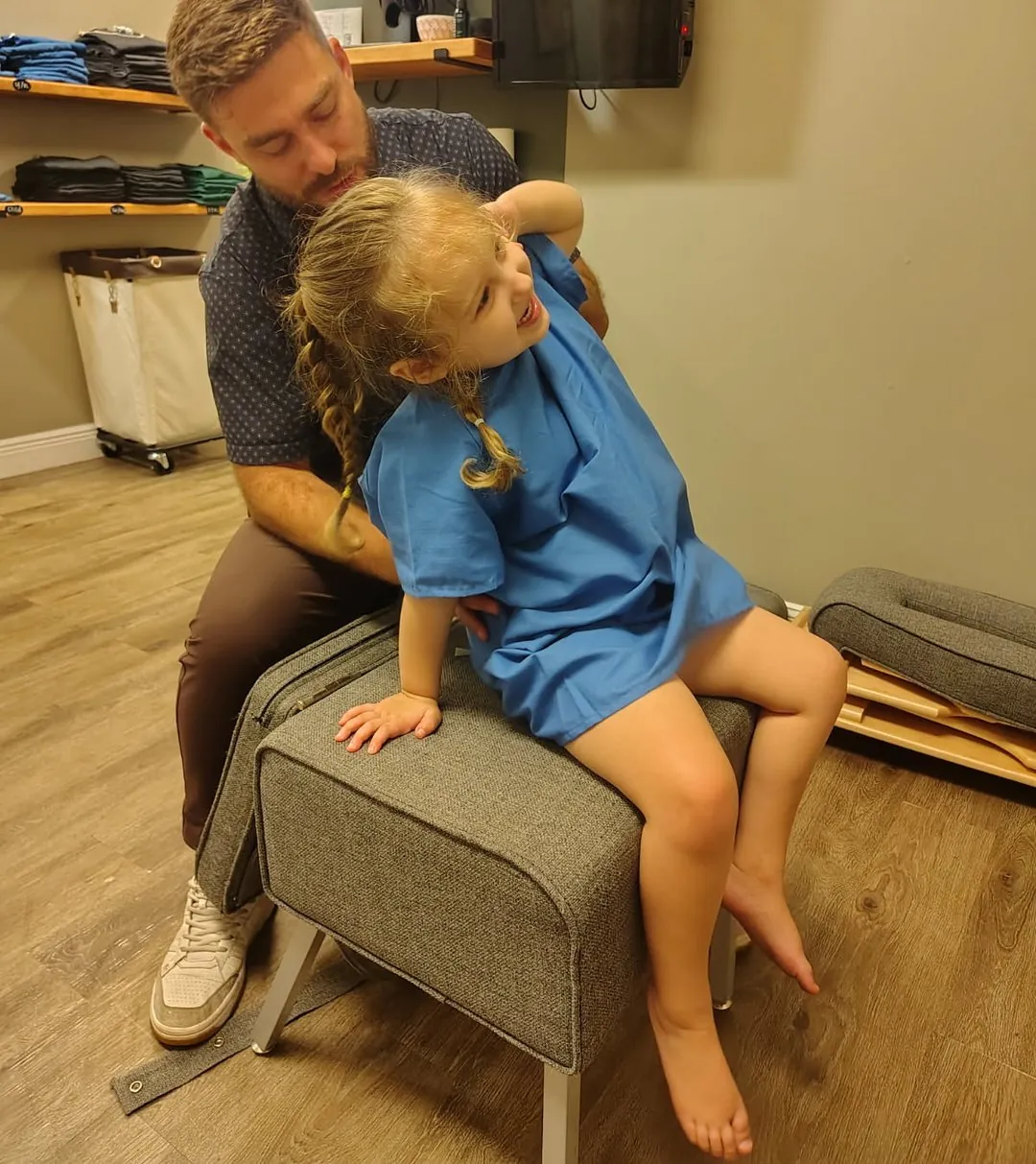
A nervous system stuck in survival mode
When a child’s nervous system gets stuck in survival mode, it treats ordinary moments like danger. A scratchy shirt. A loud room. The word no. The body stays braced for a threat that is not there.
That is often what sits underneath the meltdown that comes out of nowhere, the zero to a hundred, the child who cannot sit still or cannot tell you what is wrong. They are not choosing it. Their body is stuck in protect mode, so sleep, digestion, focus and calm all have to work uphill.
You do not have to guess whether this is happening. We measure it.
What we measure
We do not guess. We test.
Three INSiGHT scans by the Chiropractic Leadership Alliance. Nothing goes through the skin, there is no radiation, and nothing about it hurts. These are real scans from our office, with names and dates removed.

The muscle scan
Small sensors touch along the back while your child sits still. The black line should follow the white one. Above it, the muscles are working too hard, like the body is bracing. Below it, they are running low on energy.
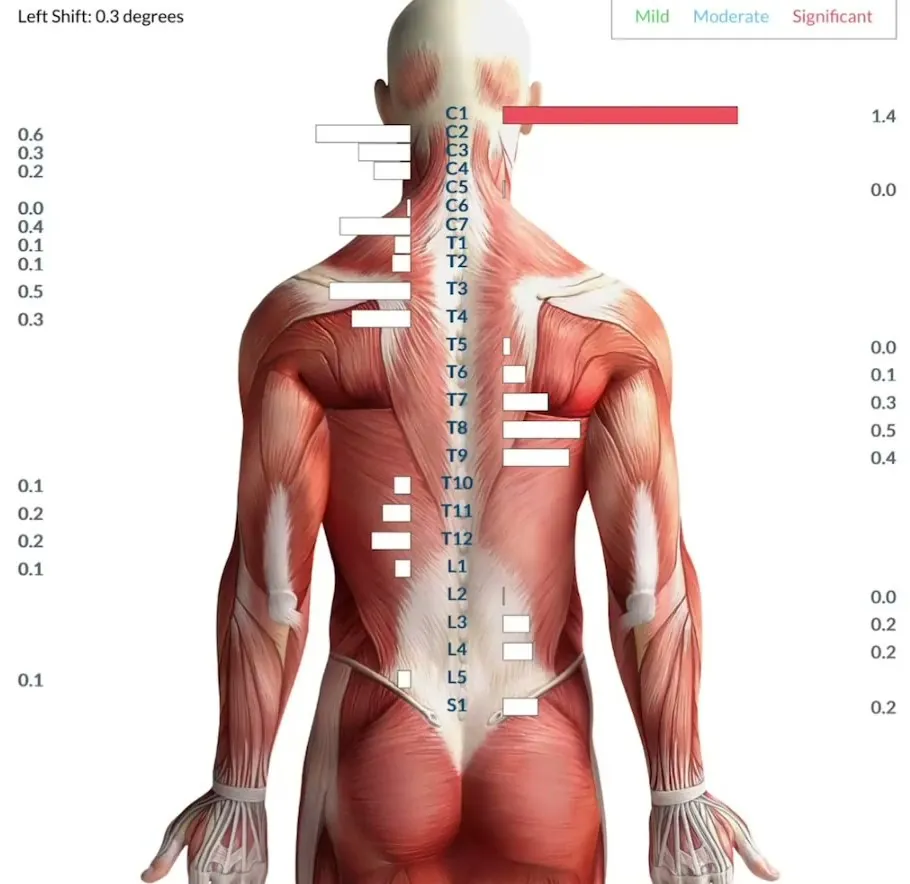
The temperature scan
A smooth scanner rolls down the spine and compares the left side to the right. Little white bars zigzagging up the back are normal. Clumps of color bunched on one side show where the nervous system is working too hard.
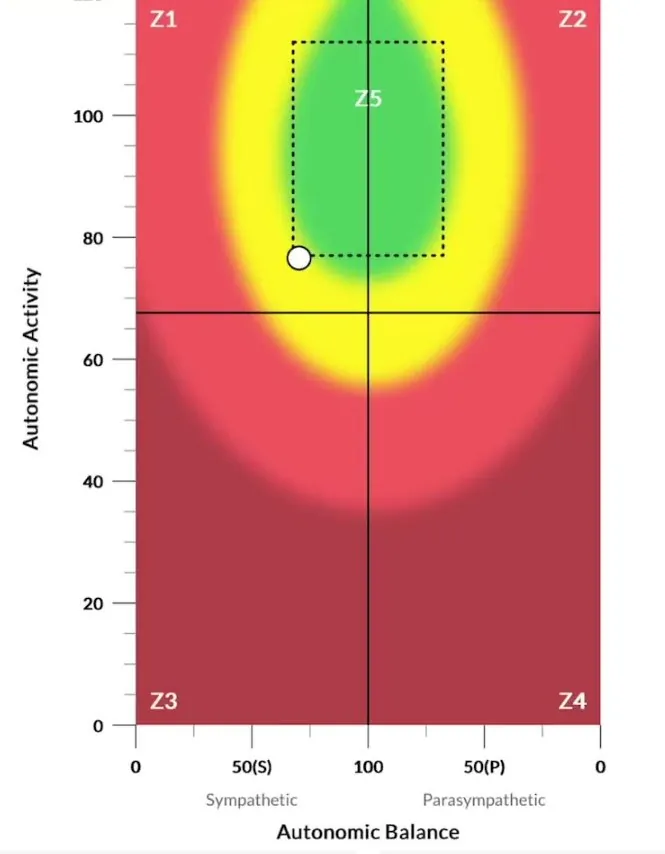
The heart rhythm scan
A little clip reads the tiny changes between heartbeats. Left or right shows whether the body is stuck on the gas pedal or the brake pedal. Up and down shows how full the tank is. We want the dot in the middle, up high, in the green.
All three repeat at weeks 4, 8 and 12, so you see change rather than hear about it.
What your family receives
Not one more therapy. The layer underneath it.
Most of our families keep OT, speech or feeding therapy going. We work on the nervous system underneath, so that work has a better chance of sticking.
- A full exam and three scansHeart rhythm, temperature and muscle, so we start from facts, not guesses.
- Your personal results videoYour doctor walks through every scan. Watch it at home, rewind it, share it.
- 36 visits over twelve weeksThree short, gentle visits a week, using the Gonstead System.
- Progress checks at weeks 4, 8 and 12We scan again and compare it to day one, so you see what changed.
- My Road to Regulation journalSimple work at home, so progress keeps going between visits.
- A video summary for your teamSomething you can hand to your spouse, therapists or teachers.
The path
Four steps, start to finish
Inside the twelve weeks
Settle the system
Three visits a week from the very first week. Short, gentle visits, plus simple work at home. First progress check at week 4.
Build on it
Still three a week. We scan again at week 8 and compare it to day one, so you see the change rather than hear about it.
Finish strong
The last stretch of all 36 visits, a final scan at week 12, and an honest talk about what, if anything, comes next.
Proof, not promises
Hear it from the parents
No actors and no scripts. Parents of children in the 12 Week Behavior Reset, filmed here in our office.
Every child is different, and results vary from child to child. More family stories and 480+ five-star Google reviews

Our true satisfaction guarantee
Show up, and we stand behind it
We are confident enough in this program to put our own time on the line. If you do your part and you are not happy, the next twelve weeks are on us.
Come to all 36 visits within the twelve weeks. That is it.
Unhappy for any reason at all? We run a whole second twelve weeks for your child, completely on the house.
This is a service guarantee, not a refund. It applies to the three visits a week program, and your doctor explains it in your results video.
Is this right for your family
Who this is for, and who it is not
This is for you if
- You believe your child can heal, and you want to unlock what their nervous system is capable of.
- You want to work from the inside out, on the foundation, instead of only managing behavior from the outside in.
- You can get to our Oakland office, off HWY 50 between Winter Garden and Clermont, three times a week for twelve weeks, all 36 visits.
- You are ready to be a partner in it, with simple work at home between visits.
This is not for you if
- You are looking for a quick fix, or one visit that changes everything.
- You want one more therapy to add to the list, another appointment that treats the outside.
- You only want to manage symptoms, not look at what is happening underneath them.
- You cannot commit to three visits a week right now.
Not sure which side you are on? That is exactly what the free phone call is for.
Book my free phone consultQuestions
What parents ask about the Reset
“He can’t tell me what’s wrong.” Can you actually find out?
We cannot read his mind, but we can measure his nervous system. The three scans show whether his body is stuck in survival mode and where it is working hardest, so you are not left guessing. You see all of it, explained in plain English, in his results video.
“Everything is a meltdown.” Isn’t this just behavior?
Behavior is the signal, not the whole story. A nervous system stuck in survival mode reacts to small things as if they were big threats. That is the part we look at, underneath the behavior.
“We have done everything and anything.” Why would this be different?
The therapies you have done were the right work, and most of our families keep doing them. What usually has never been measured is the nervous system underneath it all. We start there, and we keep measuring at weeks 4, 8 and 12, so you are never just taking our word for it.
He doesn’t like to be touched. What if he won’t let you?
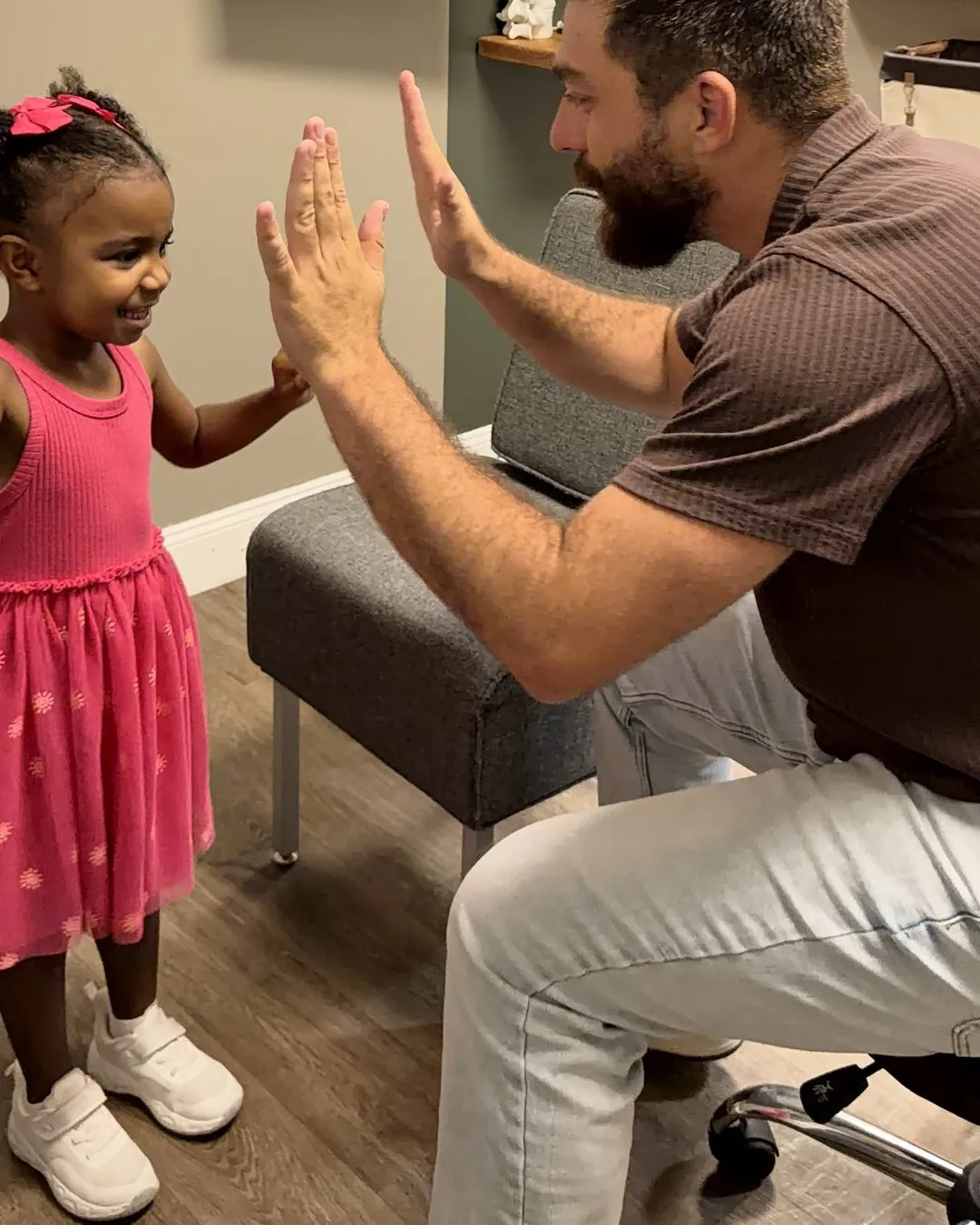
We hear this a lot, and it is okay. We go at your child’s pace and never force anything. The care is gentle, and for little ones the pressure is about what you would use to check a tomato for ripeness.
Is it cracking his back? Is it safe for a small child?
It is not the back cracking you might be picturing. Using the Gonstead System, we find the exact spots that need care and gently adjust only those. Nothing about it should hurt.
Do you treat autism or ADHD?
No, and we will never say we do. We do not diagnose or treat those conditions. We work on the nervous system underneath, and many of our families happen to have a child with one of those diagnoses.
Do we stop our other therapies?
No, and we would rather you did not. Our aim is to help that work stick.
How often do we come in?
Three visits a week for twelve weeks, 36 visits in all, Monday through Thursday. Visits are short, and we go through the schedule with you before you decide anything.
We live far away. Is that a problem?
Many of our families drive an hour or more to be here. Because the program is three visits a week, talk it through with us on the phone call so the schedule works for your family before anything is booked.
Does my child need to be on the phone call?
No. The call is just for you, so you can talk freely. Your child comes in for the exam.
My spouse needs to be on board too.
Good. Share the results video with them. They hear exactly what you hear, straight from the doctor, and you can decide together, in your own time.
What does it cost? Do you take insurance?
The new patient exam is $67, scans included. We do not bill insurance, and HSA and FSA cards are welcome. What care costs after that depends on what we find. Your doctor walks through it, and the payment options, in your child’s results video, so you can take your time.
Do we come back in for the results?
No. Your doctor records a personal video that walks through each of your child’s scans in plain English, and we send it to you. Watch it at home when the house is quiet, rewind any part, and share it with anyone who helps care for your child. When you are ready, just text us.
What if it does not work?
We re-scan, so it is not a matter of opinion. If the numbers are not moving we will tell you. And if your family comes to all 36 visits within the twelve weeks and you are unhappy for any reason, the next twelve weeks are on us.
Next step
Start with a phone call
Free, about fifteen minutes, and only you need to be on it.